
Portable toilets
Portable Toilets Australia
Single cabins, twin blocks and accessible units for worksites, events and public reserves.
Get a free quotePortable toilets built to order and sold outright, never hired. Each one is a self contained moulded HDPE cabin carrying its own fresh water and waste tanks, so it runs with no plumbing connection and no power lead. Four models: the compact site unit, the heavy duty Australian and New Zealand spec unit, a shower and toilet booth, and a wheelchair access cabin. Delivered anywhere in Australia.
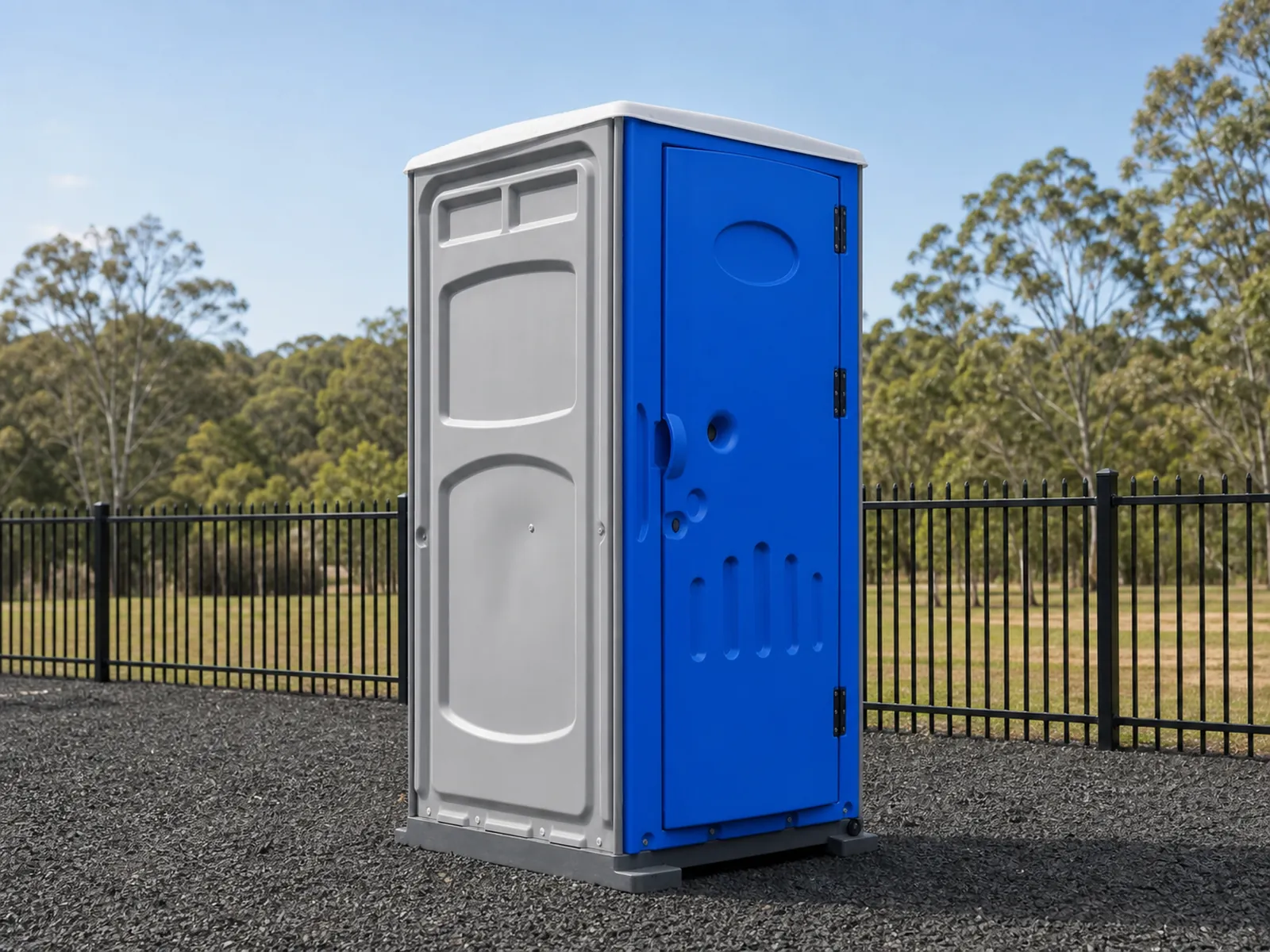
Explore the portable toilet range
Four models, every one a fresh water flush unit with a hand basin. Nothing in this range is a chemical recirculating system. Built to order, delivered Australia wide, minimum order one unit. Factory quote available, because freight to a Pilbara camp and freight to a Brisbane yard are not the same number and we would rather price it than guess it.
Portable Toilets Australia
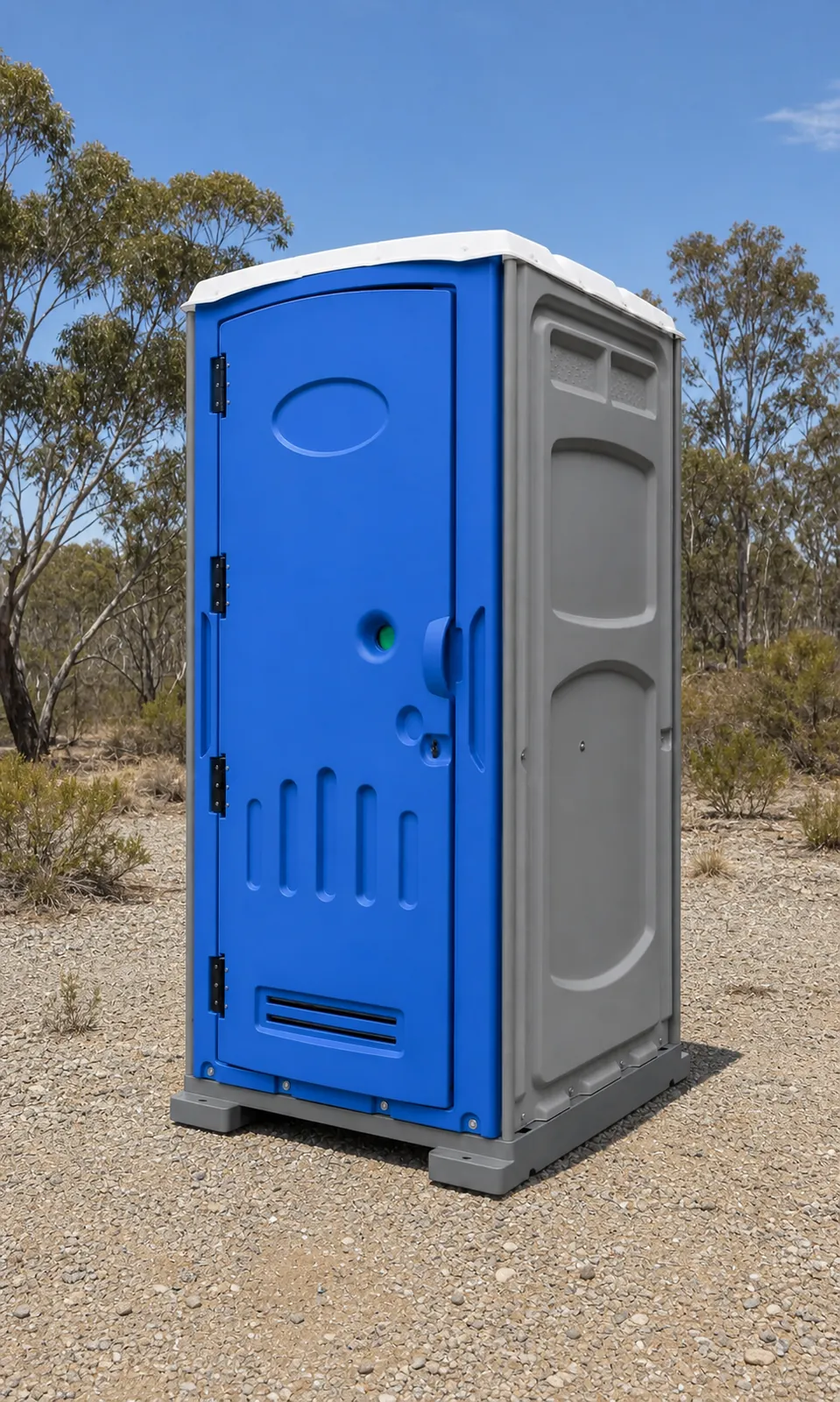
PL11 Compact Portaloo 1.1m
Compact self contained HDPE portaloo for events, hire fleets and building sites.
6 photos
Factory quote available
Portable Toilets Australia
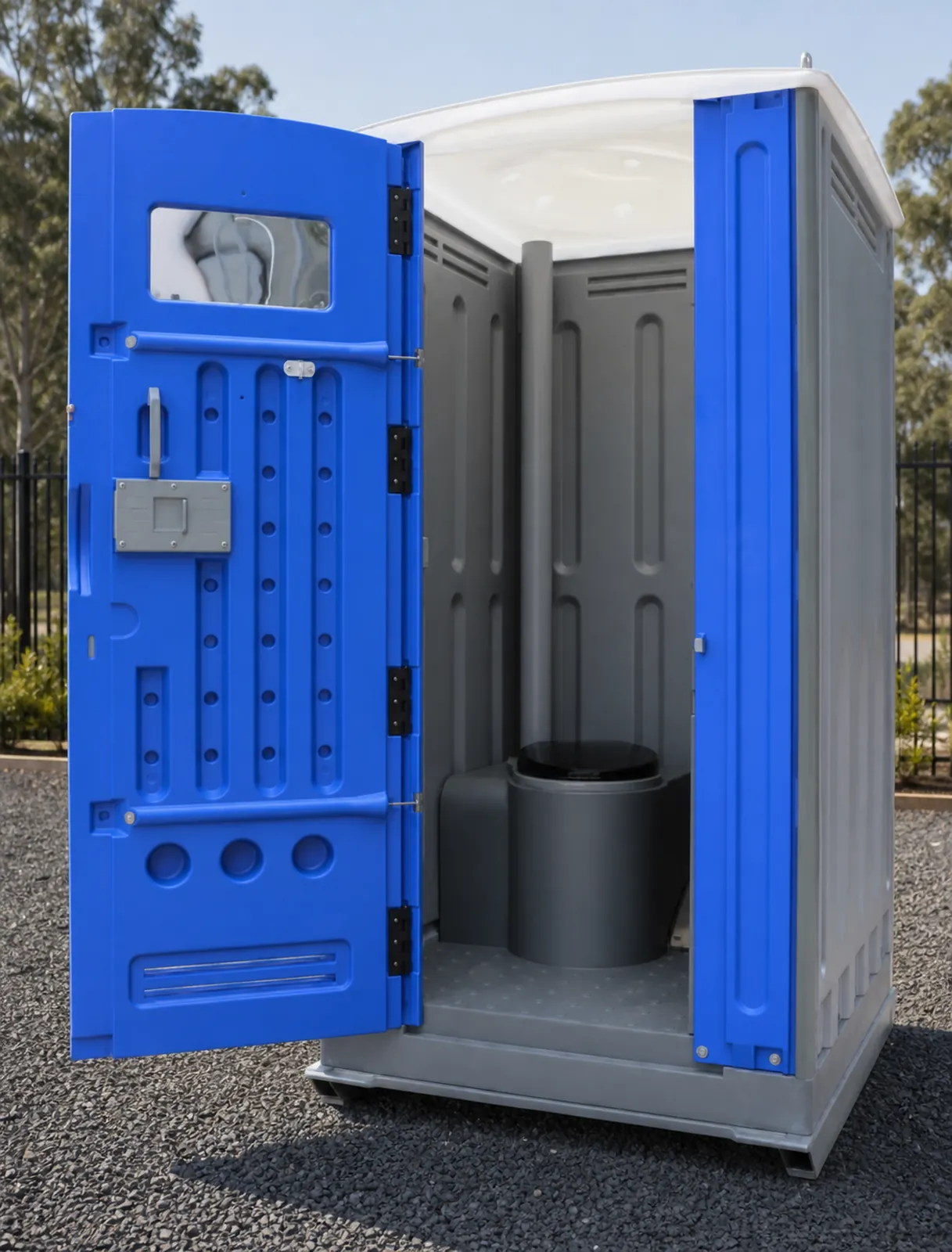
PL12 Heavy Duty Portaloo 1.2m
Heavy duty HDPE portaloo on a steel skid, spec’d for Australia and New Zealand.
2 photos
Factory quote available
Portable Toilets Australia
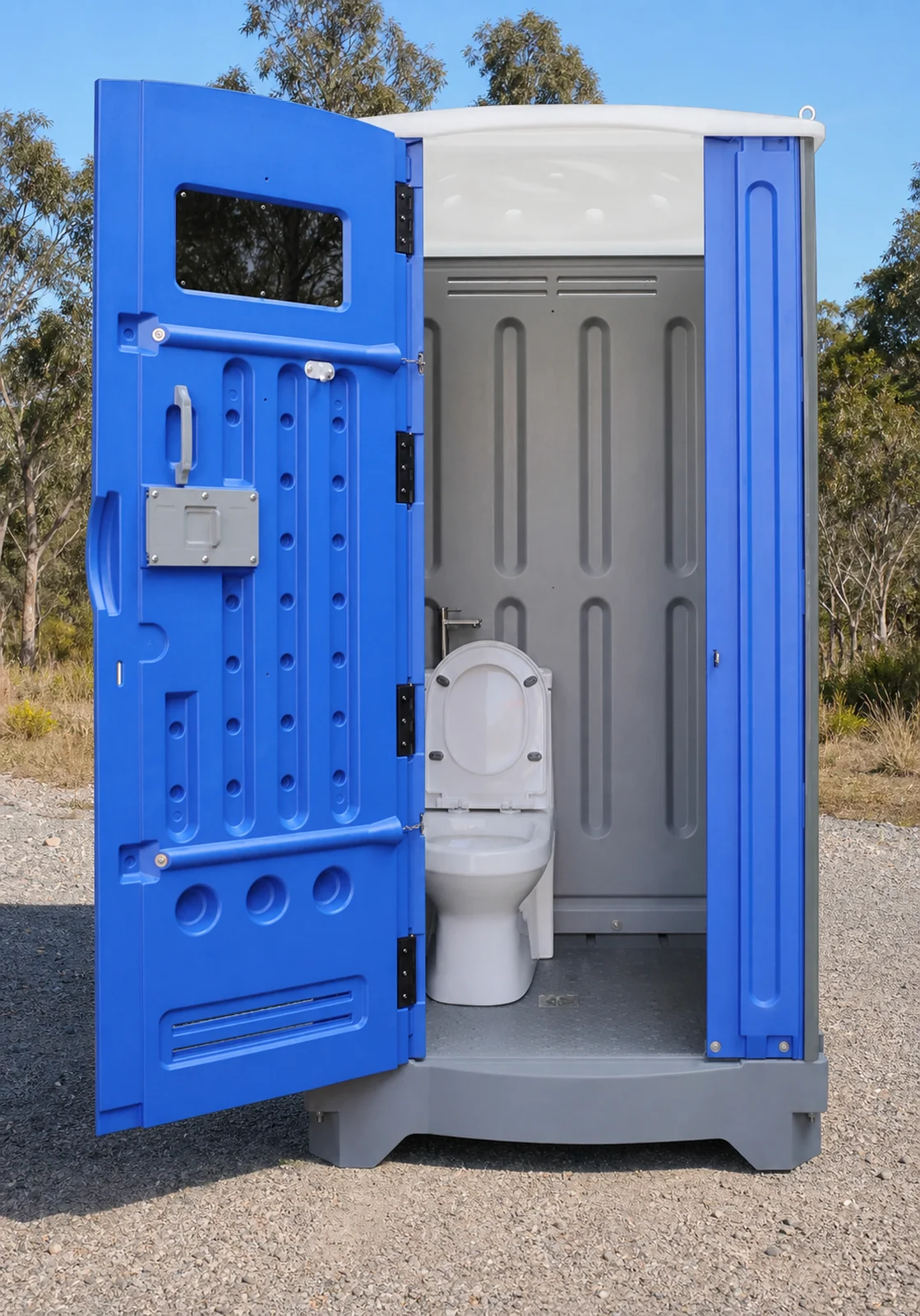
PL114 Portable Shower and Toilet 1.14m
Shower and toilet in one HDPE booth, the wash and go unit in the plastic range.
2 photos
Factory quote available
Portable Toilets Australia
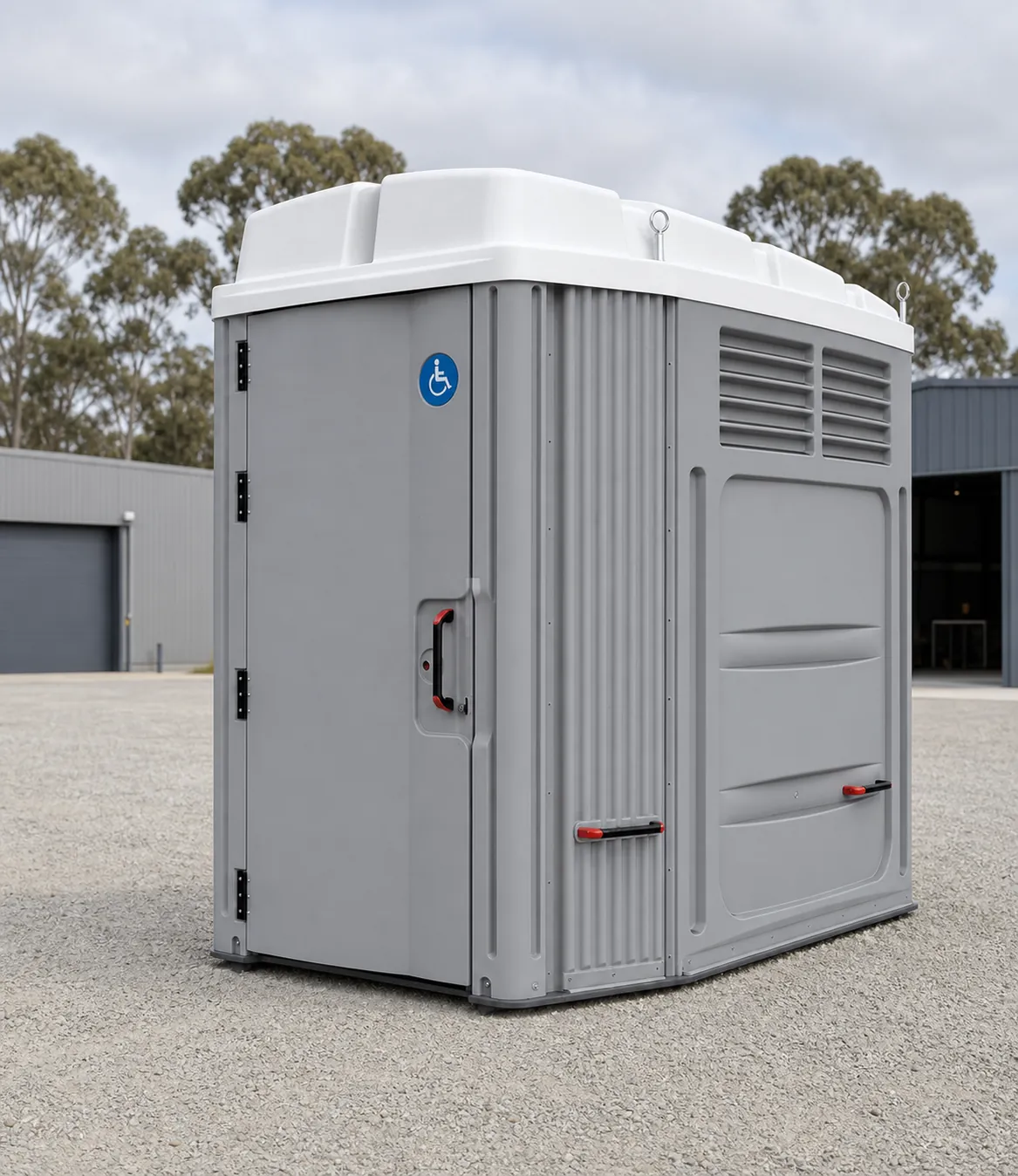
PL222 Accessible Portaloo 2.22m
The wheelchair access unit in the plastic range: roomy, wide door and a grab rail.
10 photos
Factory quote available
What a portable toilet actually is
A portable toilet is a moulded high density polyethylene cabin holding a pan, a small fresh water tank, a hand basin and a sealed waste tank under the floor. Press the foot pump and it flushes with clean water from its own tank. Everything stays in the holding tank until a truck empties it. No sewer connection, no water connection, no power lead. That is why the same object works on a paddock, a footpath, a festival site and a slab that has not been poured yet.
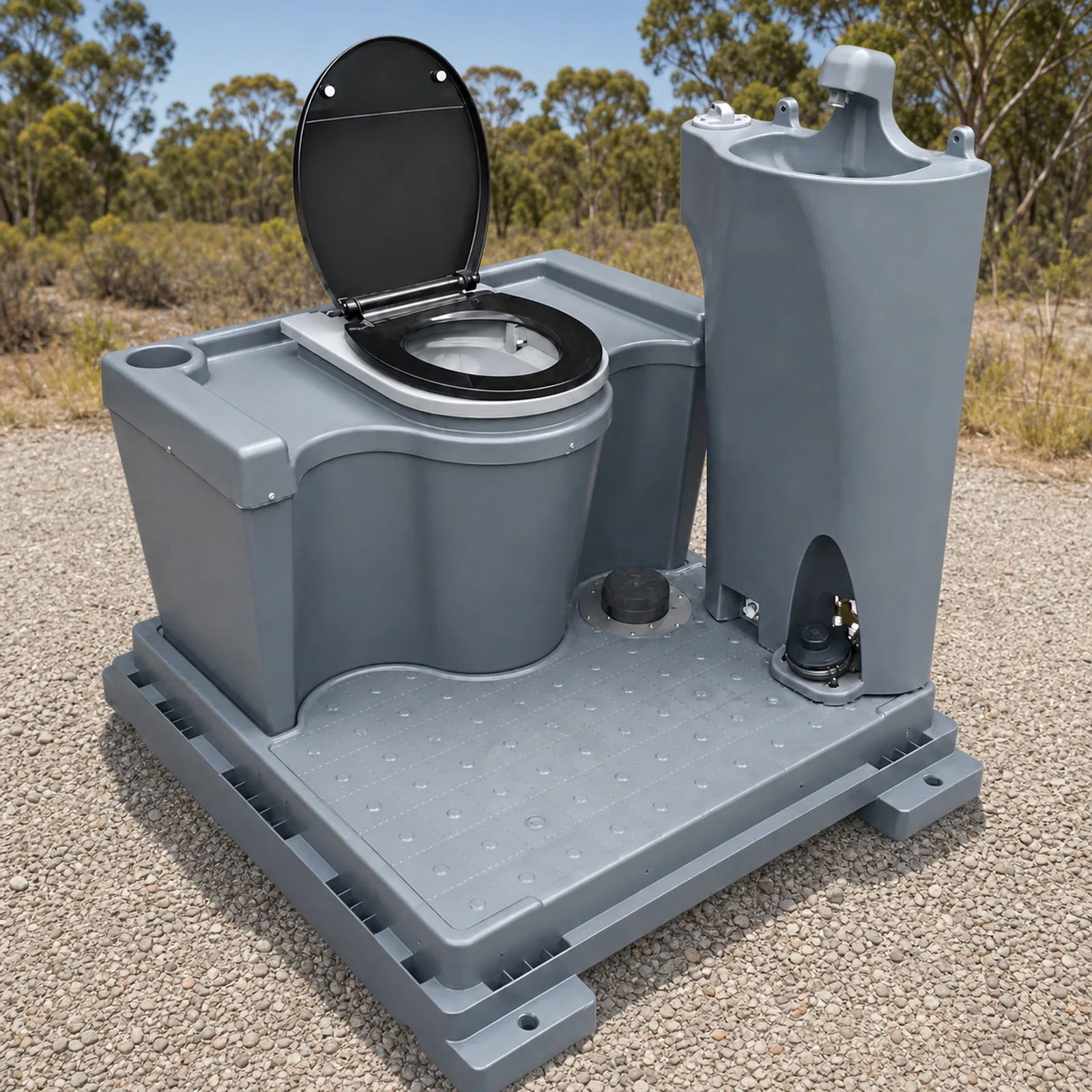
The Hire and Rental Industry Association publishes a Code of Practice for Portable Toilets, and it is the right yardstick to hold any quote against, ours included. It sets a cabin no smaller than 1,000 x 1,000 x 2,150 mm, at least 1,900 mm of internal height, a floor that carries 200 kg at any point, a self closing door with an internal lock, and a waste tank of at least 100 litres useable capacity vented through the roof by a 50 mm stack. Tank capacity is where units differ most, and it decides how often the truck comes.
The five things Australians mean by a portable toilet
Almost every enquiry is one of five jobs, and the right unit differs for each.
1. The builder’s site toilet. One cabin on a skid at the edge of a job, pumped out weekly. The highest volume use in the country, and the reason “site toilet” and “builders toilet” get searched as often as they do. Tank size and durability matter more than looks.
2. The event portaloo. Same cabin, completely different servicing. Events run on daily pump outs and on numbers, not on one unit doing a week’s work.
3. The accessible unit. A wider door, a grab rail and enough floor to turn a wheelchair. Councils, shows and carnivals ask for one as a matter of course, so it is a separate purchase rather than a tick box on a standard cabin.
4. The toilet and shower combination. A pan and a shower fixture in one booth, for workforce camps, multi day festivals, surf clubs and relief staging where people need to rinse off.
5. The plumbed cabin that stays put. Not a portaloo at all, but a steel framed amenities cabin connected to water and waste and left in position, with a different approval path. That is our ablution block range.
On terminology: portaloo is the Australian word, porta potty is the American one, dunny is slang, and the trade sometimes writes “portable restroom” on the invoice. Same object.
When a portable toilet is the wrong answer
We would rather lose the enquiry than sell you the wrong thing. These are the cases where buying one of these from us is a mistake.
Your job runs for weeks, not years. Hire it. A local company will drop a unit tomorrow, service it on a run they already do, and take it away when you finish. We build yours from scratch and ship it, which takes 40 to 60 days. On a six week job they beat us on cost and on speed. Buying starts to make sense when the unit stays in service for years, or when you are building a fleet of your own.
You need a permanent amenity for a house, a club or a park. A tank someone has to pump is the wrong long term answer where mains water and a sewer or septic already exist. Plumb an ablution block or a bathroom pod in instead and stop paying for pump outs forever.
Your contract mandates certified accessible compliance. Our accessible unit gives real wheelchair access with an 890 mm door and a grab rail, but it is not a certified AS 1428.1 fitout. If a council contract, venue or event licence requires certified compliance, tell us before you order.
Nobody services liquid waste near you. The cabin is the easy part. With no licensed contractor running past your site, the tank fills and the unit stops being useful. Check that before anything else.
More than about twenty people on site permanently. The code then has you running four or more cabins, and four cabins is usually worse value and worse to service than one multi cubicle block.
You need it next week. We cannot help. There is no express lane on a 40 to 60 day build and ship.
How many portable toilets do you actually need
For building and construction work the Hire and Rental Industry Association Code of Practice sets the working guide. It is not law, but it is what the Australian hire trade quotes off.
| People on site | Units, weekly service | Units, fortnightly service |
|---|---|---|
| 1 to 5 | 1 | 1 |
| 6 to 10 | 1 | 2 |
| 11 to 20 | 2 | 4 |
| 21 and over | Add 1 unit per additional 10 people | Not recommended |
Source: Hire and Rental Industry Association, Code of Practice Portable Toilets, section 4.1, building and construction sites excluding events.
Events work off crowd size and duration instead. The same code puts an event of up to 240 people at 3 units for six hours and 4 for twelve, and 1,000 to 1,999 people at 12 and 18. Serve food and drink and it says lift the count by at least 30 per cent.
Queensland is the state to check first. The Work Health and Safety (Amenities for Construction Work) Amendment Regulation 2024 commenced on 1 January 2025 and applies to construction projects, meaning construction work costing $250,000 or more. It requires at least one toilet for each 15, or part of 15, construction persons, plus at least one designated female toilet for each 100, or part of 100, construction persons. Your state work health and safety regulator can set a different ratio again, so treat the table as the starting point and the regulator as the authority. More on worksite amenities in our article on ablution blocks and crib rooms for Australian worksites.
The approval question for a portable toilet in Australia
This is the one thing about a portaloo that is easier than everything else we build, and it surprises people.
A freestanding, self contained unit is usually not assessed as a building at all. It is not fixed to the land, not connected to services, and a hiab can lift it away. Councils and certifiers generally treat it as equipment: workplace amenity on a construction site, or event infrastructure at a show. That is the opposite of a granny flat or a site office, both of which become buildings the moment they sit on footings and take a power feed.
It changes the moment you fix it down or plumb it in. Bolt it to a slab, run water to it, run a waste line to a septic or sewer, and you are in building and plumbing territory. Connecting to an on site wastewater system is its own approval, assessed by your council or the state health department, and it is about the septic system rather than the cabin.
On a construction site it is a work health and safety question, not a planning one. The duty is to provide adequate, clean, accessible toilets for the people working there, and it sits with the person conducting the business and, on a construction project, the principal contractor. Nobody lodges a development application for a site toilet. At an event, amenity numbers are usually a condition of the temporary event permit.
We supply the compliance documentation to support your application. Your certifier or council issues the approval, and we cannot guarantee approval. Where a building approval does apply, the paperwork is set out on our approval pathway and council approval and compliance pages.
Which unit suits your job
All four are fresh water flush with a hand basin and fully self contained. What separates them is the base they sit on, how much waste they hold between services, and how much room is inside. Read the tank column first. It decides your servicing cost.
| Model | Size and weight | Tanks | Best for |
|---|---|---|---|
| PL11 Compact | 1,100 x 1,000 x 2,300 mm. About 88 kg. | 43 L fresh, 190 L waste. | Hire fleets and event operators buying volume. |
| PL12 Heavy Duty | 1,200 x 1,150 x 2,300 mm. About 150 kg. | 160 L fresh, 280 L waste. | Australian sites, camps and regional events. The pick if the servicing run is long. |
| PL114 Shower and Toilet | 1,140 x 1,175 x 2,300 mm. About 150 kg. | Confirmed in your quote. Hot and cold upgrade available. | Workforce camps, festivals, surf clubs, relief staging. |
| PL222 Accessible | 2.22 m long. Door 890 x 1,900 mm, wheelchair width. | 38 L fresh, 61 L waste, so it wants servicing more often. | Shows, carnivals, markets, beaches and reserves. |
The build differences behind that table. The compact unit is HDPE panels on a moulded base with a double skin roof, and it ships unassembled at about 11 m³ per ten units, which is why fleet buyers choose it. Its plumbing is configured to North American practice, so the heavy duty unit is the one spec’d to Australian and New Zealand standards, on a galvanised steel skid with lifting hooks fitted. The shower unit adds a ceramic pan and a wall mounted shower fixture. The accessible unit runs a hand pump flush and a balustrade grab rail, with four lifting hooks optional, and it gives wheelchair access without being a certified AS 1428.1 unit.
Plastic portaloo, steel toilet cabin, or hire
Three answers to the same problem, and the honest version is that hire wins more often than we would like. Work out how long the thing has to be there before anything else. That number decides it.
| Plastic portaloo, bought | Steel toilet cabin, bought | Hire | |
|---|---|---|---|
| How it works | Self contained. Fresh and waste tanks on board. | Plumbed to water and to sewer, septic or a tank. | Self contained, and the fleet owner pumps it. |
| Time to site | 40 to 60 days, built to order. | 40 to 60 days, built to order. | Usually days. |
| Site works | None. Level ground is enough. | A pad, water and waste connections, often power. | None. |
| Moves easily | Yes. Hiab, or a forklift under the skid. | Craned. It is a building, not equipment. | Yes, and moving it is their problem. |
| Best above | Years of use, or a fleet you rent out. | A permanent amenity for a site, club, park or camp. | Anything short. Weeks to a season. |
| Watch out for | You now own the servicing and pump out cost. | Approval, plumbing and drainage all apply. | The weekly rate compounds. Over years it is dear. |
If you land in the middle column, the range you want is ablution blocks: single cabins, twin blocks, shower blocks and accessible units with a ramp. Longer comparison in our article on choosing a bathroom pod or a portable toilet.
Where the waste actually goes
Into the sealed holding tank under the pan, and nowhere else, until a truck comes. A purpose built vacuum truck pumps the tank dry, rinses it, replaces the chemical and water, refills the fresh tank and restocks the paper. Nothing soaks into the ground and nothing enters stormwater.
From the truck it goes to a licensed treatment or disposal facility. Liquid waste haulage is regulated state by state, so your contractor needs the right licence and in most states has to move the load under the controlled or trackable waste system, with a record of where it came from and where it went. Ask for that paperwork.
One detail that catches new owners out: units should be pumped before transport, or carry no more than about ten per cent waste. A full unit on the back of a truck is a spill waiting to happen.
How ordering works
- 1. Tell us the model, the head count and the postcode. How many people it serves and how often it can be serviced is enough for us to say whether you have picked the right unit.
- 2. We come back with a written quote. Unit, specification and freight to your address. Price on request, always. Minimum order one unit, and freight per unit falls hard on a container load, which is why fleet buyers order that way.
- 3. Build and delivery. Factory production of 20 to 30 days, delivery of 20 to 30 days, so 40 to 60 days from order to site.
- 4. Set down. Delivered Australia wide by truck. A single cabin comes off with a hiab or a forklift and needs level ground, not a footing. Remote sites in Western Australia, the Northern Territory and northern Queensland are routine, but they change the freight leg, so give us the actual address, not the nearest town.
Portable toilet questions
Do you hire portable toilets?
No. We sell outright and build to order. No rental fleet, no weekly rate, no swap out, no service run. For a job of a few weeks a local hire company is the right call and will beat us on cost and speed. Where we fit is the other side of that trade: much of what we build goes to hire operators growing their own fleets.
How many portable toilets do I need on a construction site?
The Hire and Rental Industry Association Code of Practice sets the working guide: 1 unit for 1 to 5 people, 1 for 6 to 10, 2 for 11 to 20, then one more per additional 10 people, on weekly servicing. Fortnightly doubles those numbers and is not recommended above 20 people. Queensland sets its own minimum of one toilet per 15 construction persons, and your state regulator may differ again.
Do I need council approval to put a portable toilet on site?
Usually not as a building, while the unit is freestanding, self contained and not connected to services. It is treated as workplace amenity or event equipment. That changes if you fix it down or plumb it in, and connecting to a septic is its own approval. We supply the compliance documentation to support your application, your certifier issues the approval, and we cannot guarantee approval.
How often does a portable toilet need to be pumped out?
Weekly is best practice on a construction site, fortnightly the acceptable minimum, based on up to five people using it twice a day over a five day week. Events run on daily pump outs. Your waste tank sets the real answer: 280 litres goes much further between trucks than 61 litres.
Where does the waste go?
Into the sealed holding tank under the pan, then out by vacuum truck to a licensed treatment or disposal facility. Nothing soaks away, nothing enters stormwater. Haulage is licensed state by state and in most states moves under a controlled or trackable waste record, so ask your contractor for the paperwork.
Is the accessible unit certified to AS 1428.1?
No, and we will not pretend otherwise. The PL222 gives genuine wheelchair access with an 890 mm door, a roomy interior and a balustrade grab rail. It is not a certified AS 1428.1 fitout. If your event licence, venue or council contract mandates certified compliance, tell us at enquiry stage, not after you order.
Can a portable toilet be plumbed in instead of using the holding tank?
You can, but then you have chosen the wrong product. Fix a cabin down and connect it to water and waste and you are into plumbing approval, drainage and often building approval, and a moulded plastic booth is not the shell for that. Buy a steel framed ablution block instead, with graded wet areas and services stubbed out ready to connect.
What do they cost, and what is the minimum order?
Price on request on every model, minimum one unit. We quote the unit and the freight together, because freight is a real share of the delivered cost and changes enormously with the destination. A container load drops freight per unit sharply, which is why fleet buyers order that way.
Related ranges
Neighbouring products, if this page has talked you out of a portaloo: ablution blocks for plumbed multi cubicle amenities, bathroom pods for a finished bathroom inside a dwelling, site offices for the rest of the site setup, modified shipping containers where you want a steel box, and the full product range.
Get a Quote
Tell us the model, the head count and the delivery address. We come back with the unit and the freight in one written quote.