
Ablution blocks
Ablution Blocks Australia
Steel framed toilet, shower and hand wash buildings, delivered finished and craned onto your pad. We sell them outright to sites, clubs, councils and camps. We do not run a hire fleet.
The ablution blocks we build
Five permanent steel cabins, plus two moulded plastic booths further down for temporary work. The steel units plumb into sewer, an approved on site system or a holding tank and stay where you put them. All made to order and freighted anywhere in Australia, from Perth and the Pilbara through to Townsville, Darwin, Adelaide and Tasmania. Price on request, because freight to Karratha and freight to Dandenong are not the same number.
Read the range honestly before you shop. The largest standard unit here is a twin toilet block. A full multi cubicle block with a bank of pans, a urinal, showers and a wash trough is built to order from your fixture count, not something you pick off this page.
Ablution Blocks Australia
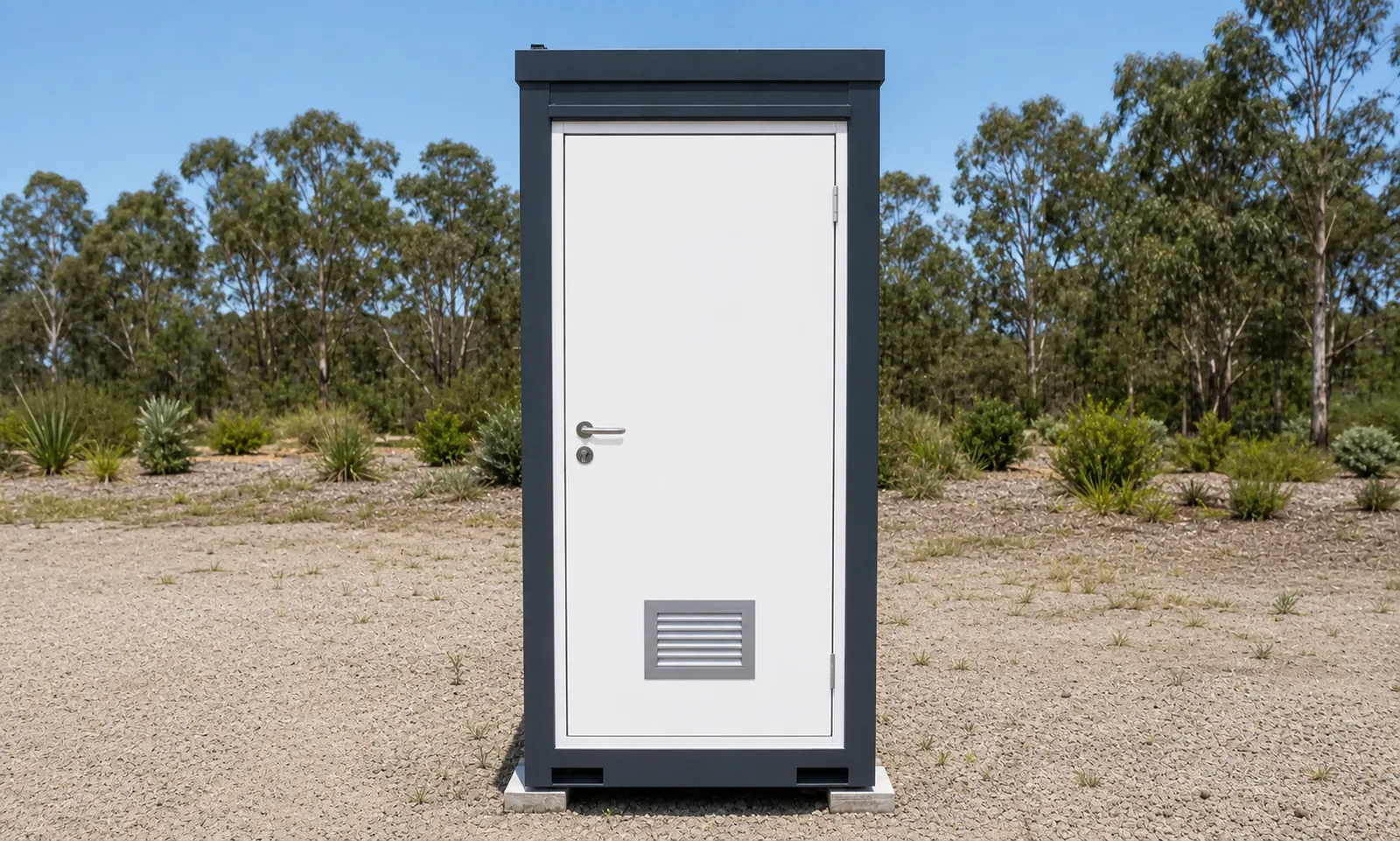
PL15 Single Toilet Cabin 1.5m
One pan, one basin, one lockable door. The smallest permanent unit we build, sized for a reserve, a shed or a rural block.
8 photos
Factory quote available
Ablution Blocks Australia
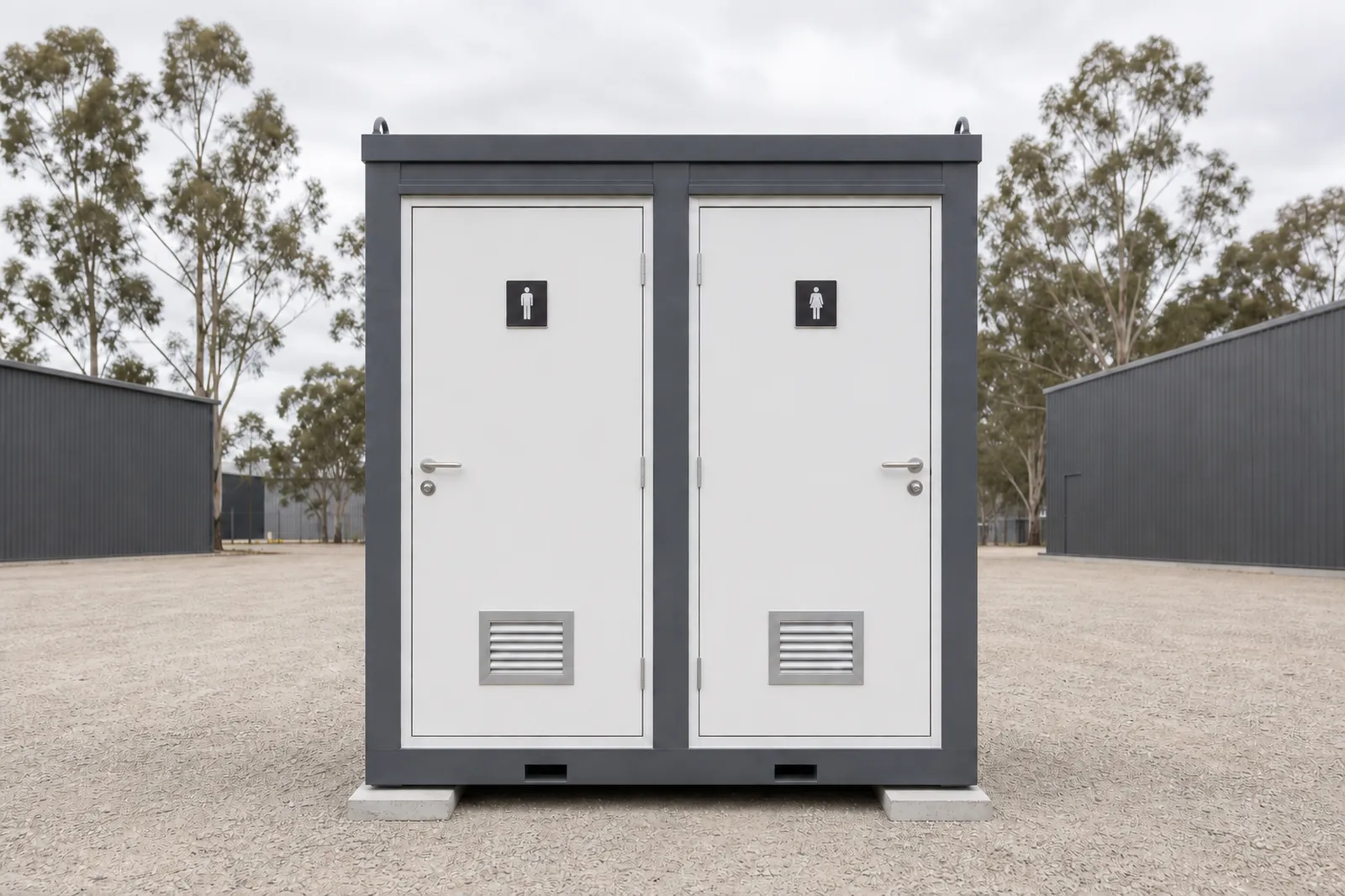
PL226D Twin Toilet Block 2.26m
Two independent cubicles in one 750 kg lift. The largest standard block on this page and the usual answer for a crew or a club.
9 photos
Factory quote available
Ablution Blocks Australia
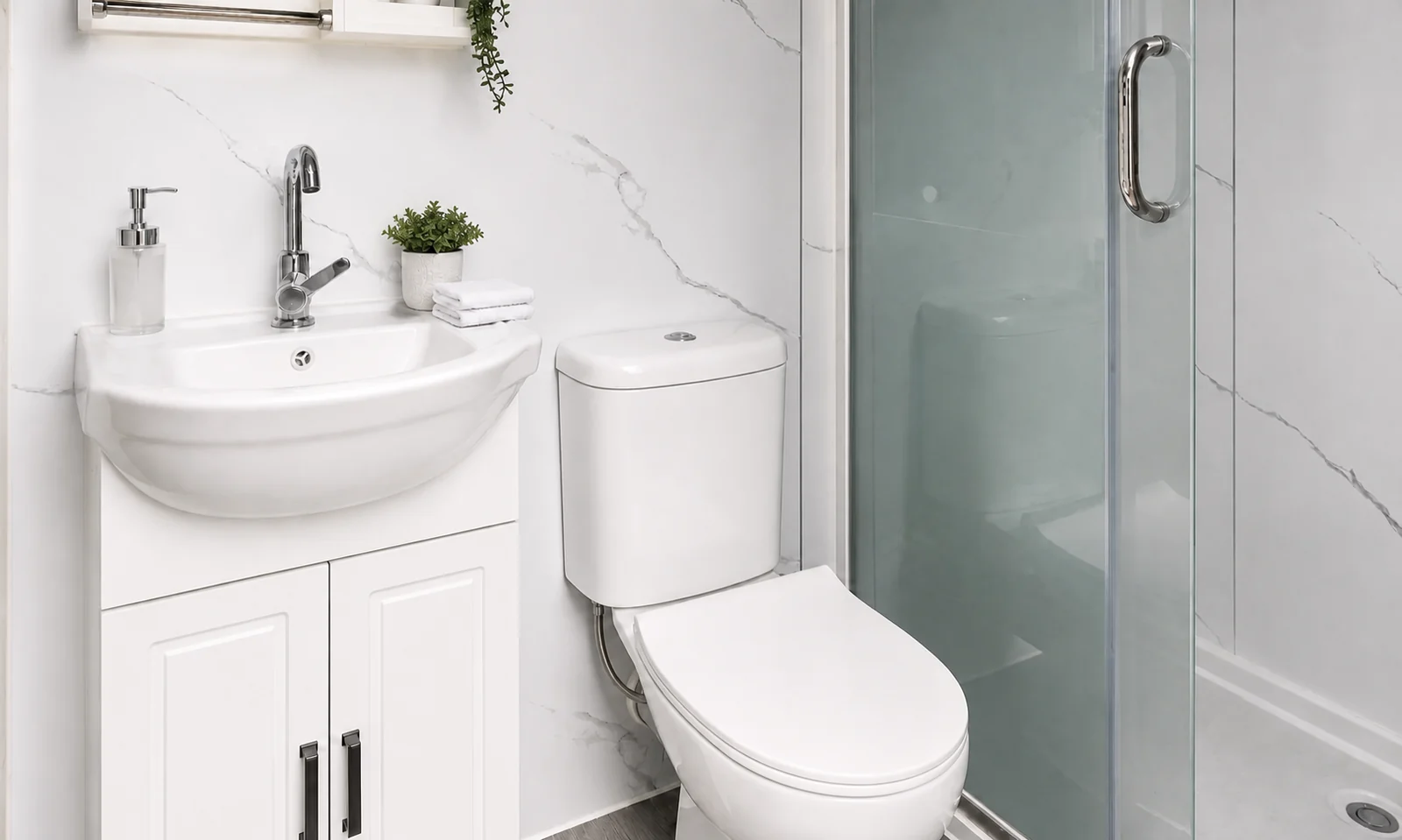
PL226B Portable Bathroom and Shower 2.26m
Rain shower, pan and vanity in one steel shell. Order this one when people have to wash, not just use a toilet.
7 photos
Factory quote available
Ablution Blocks Australia
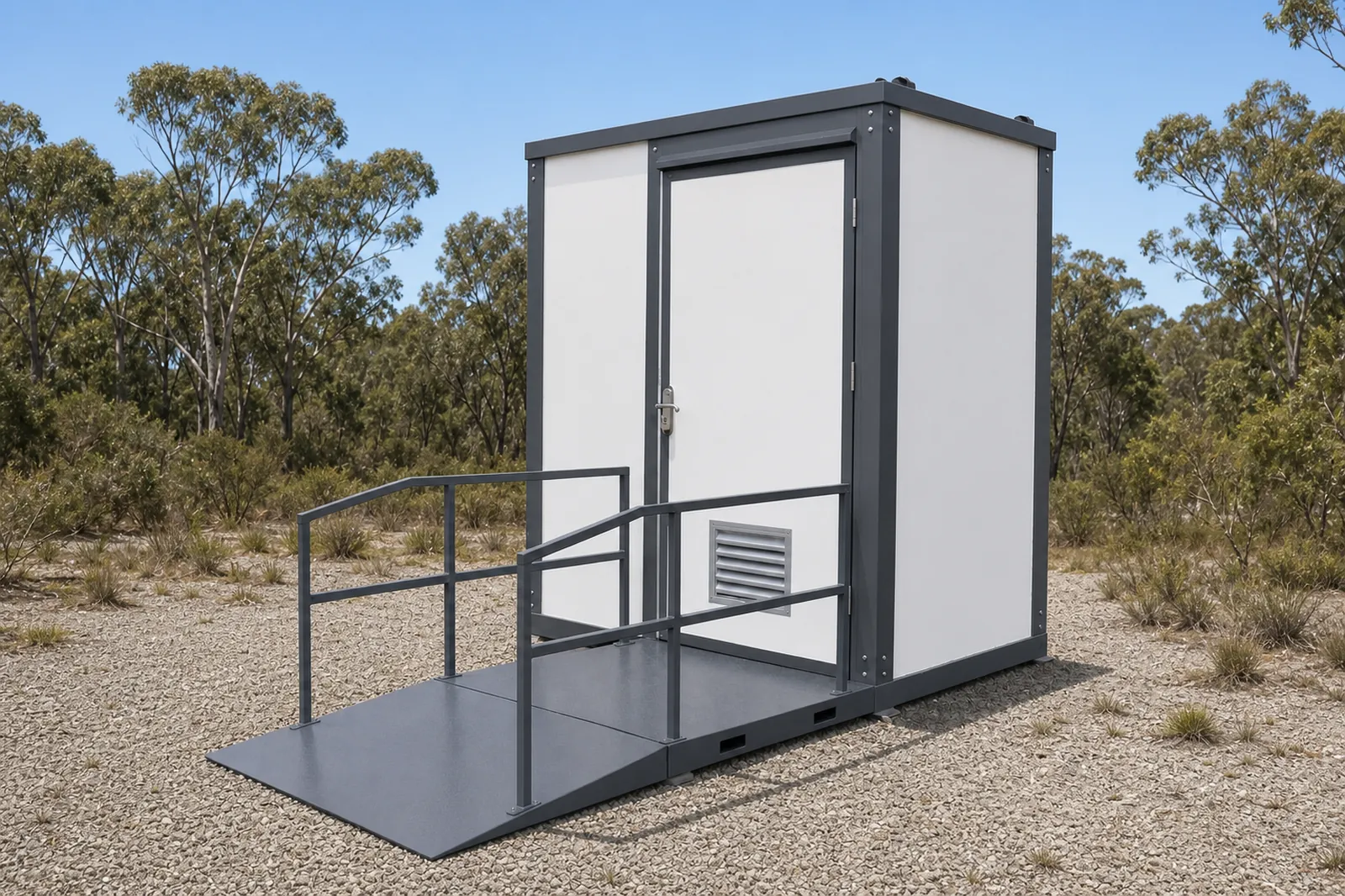
PL296A Accessible Toilet with Ramp 2.96m
A 1000 mm door, a backrest pan, grab rails and a fixed steel ramp with forklift pockets built in. Toilet and basin, no shower.
12 photos
Factory quote available
Ablution Blocks Australia
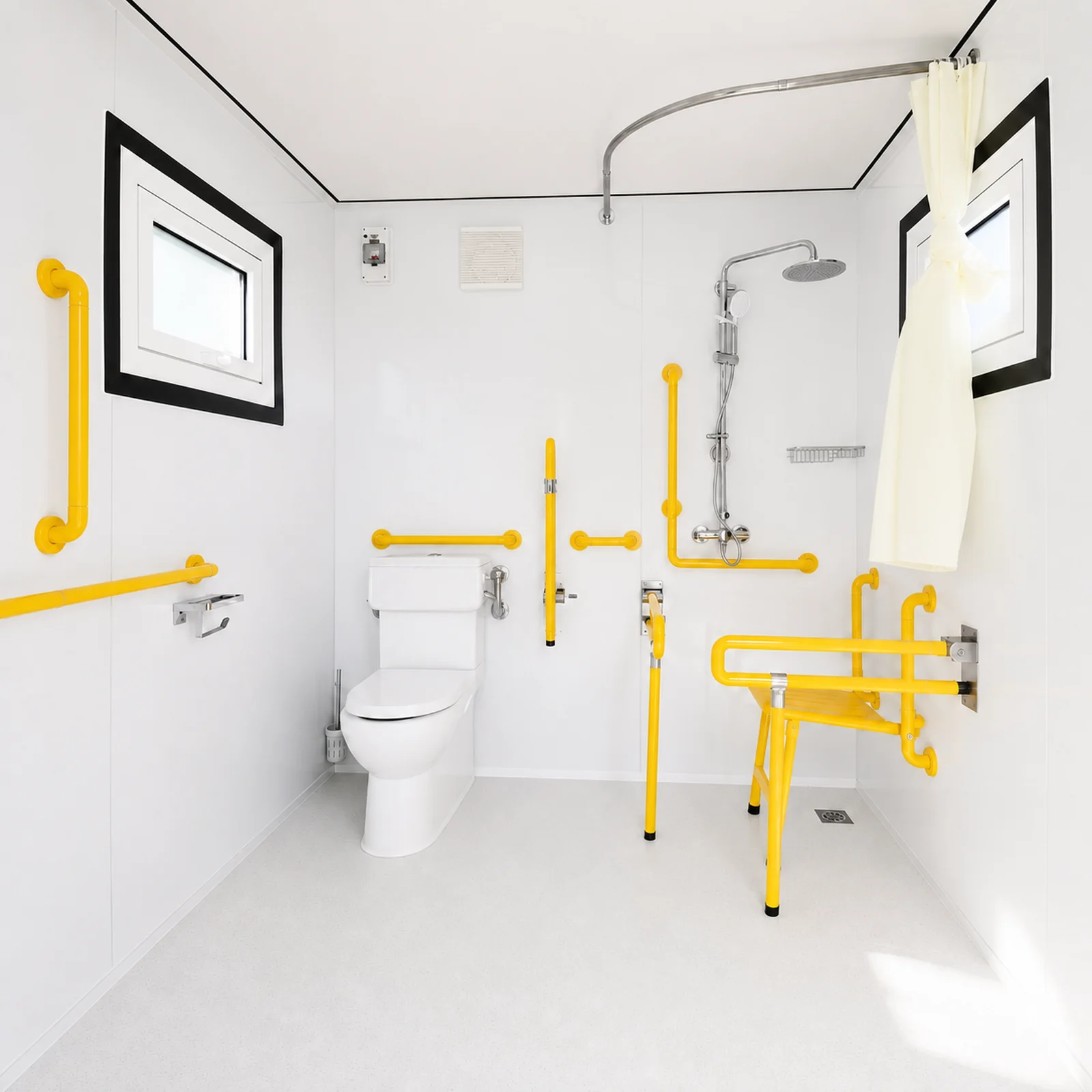
PL296W Accessible Shower and Toilet with Ramp 2.96m
About 5.5 square metres of wet room with a fold down seat, dual handrails and a central floor drain. The full accessible unit.
5 photos
Factory quote available
The plastic tier, when the job is temporary
Two units from our moulded HDPE range sit here for one reason: sometimes the honest answer is a booth, not a building. No water connection, no power, no drain. Self contained on arrival, and gone when the job finishes.
Plastic range
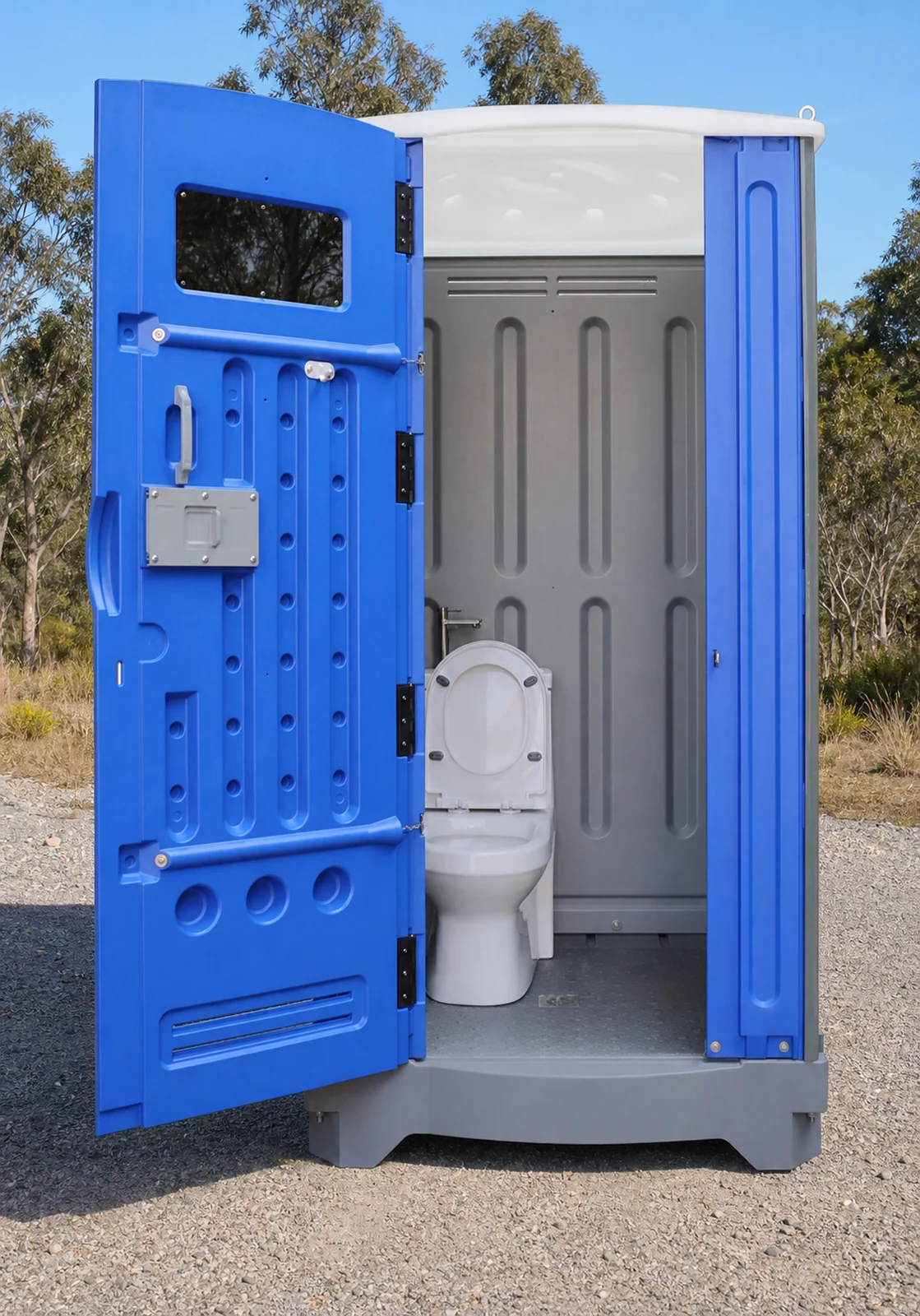
PL114 Portable Shower and Toilet 1.14m
A shower and a pan inside one moulded booth, for crews who have to rinse off before they drive home.
2 photos
Factory quote available
Plastic range
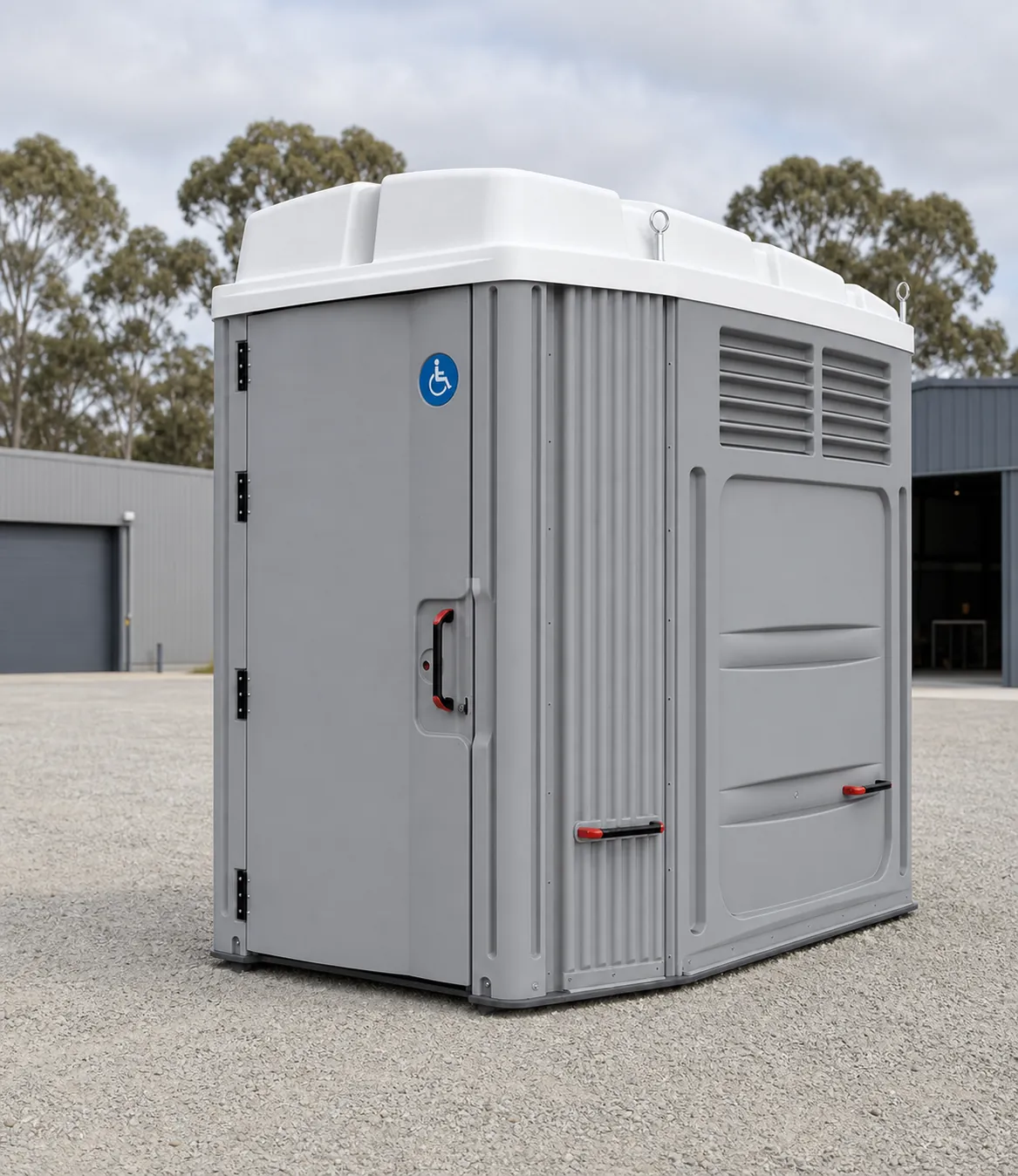
PL222 Accessible Portaloo 2.22m
An 890 mm door, a roomy interior, a grab rail and its own fresh and waste tanks. It gives wheelchair access; it is not a certified AS 1428.1 unit.
10 photos
Factory quote available
The other two booths, and the tank and flush options behind them, are on the portable toilets page.
What an ablution block actually is
An ablution block is a self contained toilet, shower and hand wash facility supplied as a finished building rather than built in place. Fixtures, wet area falls, exhaust, lighting and switchboard are done on a production line, so what comes off the truck is a room you connect, not a job you supervise for a fortnight.
Ours are built as small steel buildings. Galvanised steel frame, epoxy treated and acrylic painted. Walls of EPS insulated sandwich panel behind a wipe down lining. A magnesium concrete composite floor that does not rot, swell or feed insects. A 3 mm steel roof insulated with glass wool. Each unit arrives pre plumbed hot and cold with a 42 mm waste and the sewer run taken through the wall, and pre wired to a switchboard carrying the RCM mark.
That is the argument against a moulded booth. Insulated panels mean the cubicle does not turn into an oven by mid morning in a Queensland summer, and a rigid floor does not flex or drum underfoot. A booth is designed around a hire cycle. A steel cabin is designed to be bolted down and left alone for a service life measured in decades.
The five things people actually mean by ablution block
The words move around. Amenities block, toilet block, shower block, changeroom, site ablution, worker facilities. Underneath, nearly every enquiry is one of these five.
- 1. One toilet, on its own. A rural block, a reserve, a shed, a caravan park one pan short at Easter. That is the PL15.
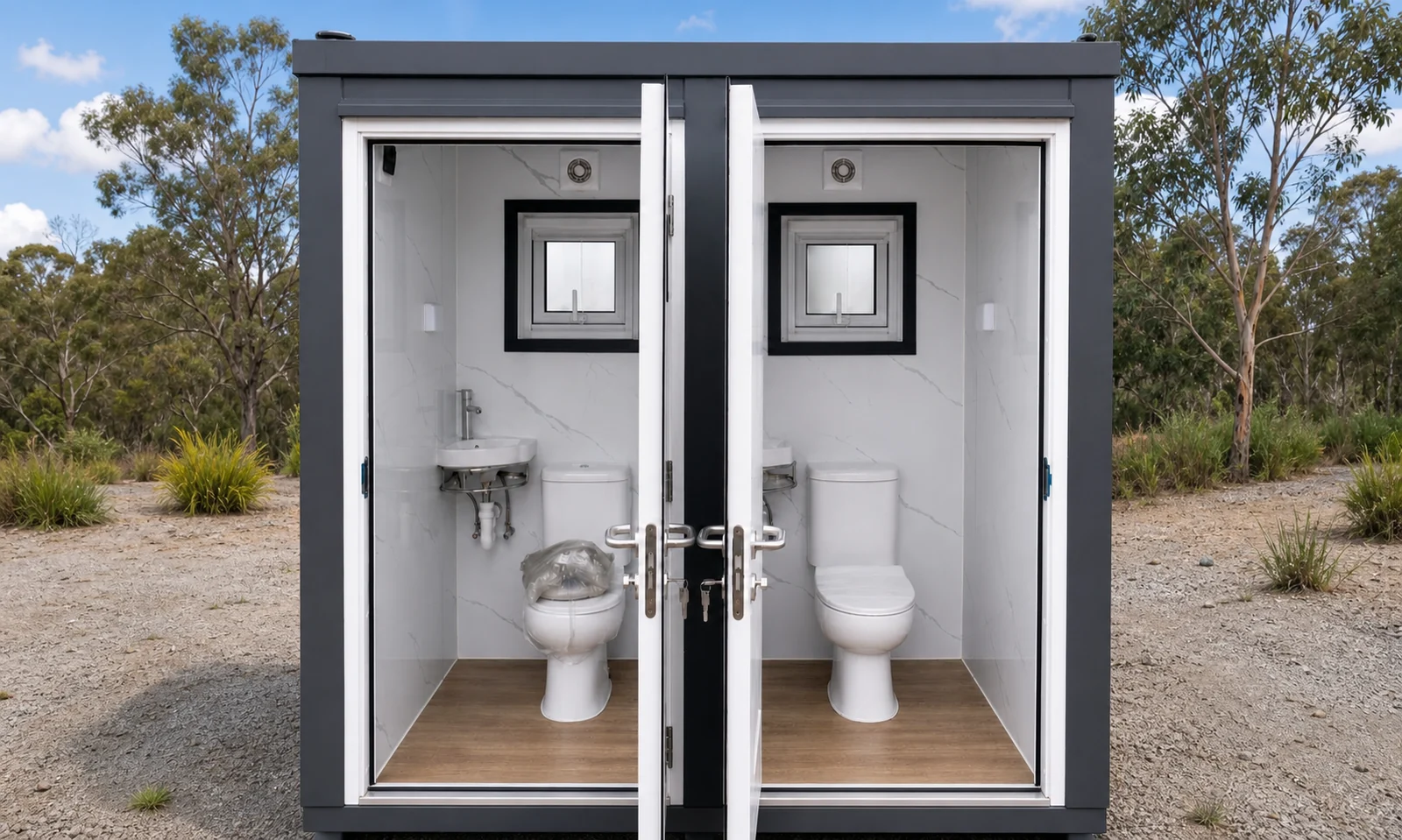
- 2. A twin or multi cubicle block. A crew of eight, a football club, a campground, a showground. Two pans and two basins in one shell is the PL226D. Past two cubicles it becomes a built to order block sized to your headcount.
- 3. A shower as well as a toilet. Earthworks, abattoirs, shearing sheds, surf clubs, workforce accommodation. The PL226B in steel, or the PL114 booth if it is temporary.
- 4. An accessible unit. Reserves, showgrounds, markets, respite and care settings. The PL296A is a toilet and basin, the PL296W adds an accessible shower. Both subject to the AS 1428.1 note below.
- 5. A container ablution block. A 20ft or 40ft steel box holding a bank of pans, a urinal, showers and a wash trough, for a camp or a large civil site. The one thing here we do not hold as a standard model. Built to order through custom projects, with the case for starting from a container on the modified shipping containers page.
One to four are on the shelf. Five is a project. Telling us which you mean, and how many people it serves at peak, cuts more time off a quote than anything else you can send.
What we do not do
We do not hire. No fleet, no weekly rate, no swap out, no servicing run, no pump out contract. If you searched for ablution block hire and your site closes in a month, a local hire company is the better answer and we will say so.
We do not install. The unit lands stubbed out and terminated. Your licensed plumber makes and certifies the water, waste and hot water connections, and your electrician makes the electrical connection and issues the certificate your state requires.
We do not certify. Neither certifier nor building surveyor is a title we hold, and both are protected. What we do is supply the compliance documentation to support your application. Your certifier issues the approval. We cannot guarantee approval, and nobody honest will.
We are not a builder. We are a factory network. No builder’s licence, no slab pour, no managing your trades.
We are not fast. Roughly 20 to 30 days of production and 20 to 30 of delivery, about 40 to 60 days in total. Half of that is a sea freight leg, so it does not compress.
When an ablution block is the wrong answer
This section costs us enquiries and stays on the page anyway, because the quickest way to waste two months is to order the wrong thing well.
The job is short. A block is a capital purchase with a freight leg attached. If the site wraps up in six weeks, a hire company with a servicing truck already in your area wins on cost, on turnaround and on taking it away afterwards.
Nobody has solved where the waste goes. This is the one that kills projects. The block is the easy half. Sewer, an on site treatment system approved by your council or state health authority, or a holding tank with a booked pump out contract is the hard half, and it pulls in a licensed plumber and often a land capability assessment. If that is unresolved, do not order yet. You will end up with a sealed building on a pad and no lawful way to use it.
The crane cannot get in. Every steel unit here is craned, tilt trayed or forklifted onto a prepared base. A 750 kg block is not a four person carry. Soft ground, no swing room, powerlines or a narrow gate get worked out on the drawings, not discovered by a truck driver at seven in the morning. The access questions in site office delivery day apply here unchanged.
You want one bathroom in a house. Then you want a wet area, not an amenities building. Look at bathroom pods.
Your contract mandates certified accessibility. Our accessible units give you a ramp, a wide door, grab rails, a fold down seat and room to turn a chair. They are not certified to AS 1428.1. If a tender or a council contract requires certified compliance, tell us before you order rather than after.
The approval question: classification, plumbing and where the waste goes
Three approvals sit behind one ablution block, assessed by different people. Getting one and assuming you have all three is the common failure.
Building. Once the unit is fixed to the land and connected to services it is a building. Which National Construction Code class applies depends on the use. A standalone amenity on private land is commonly treated as a Class 10a non habitable structure. Where it serves a public assembly use such as a clubhouse or a reserve, some certifiers assess it against the class of the building it serves. On an active construction site, some councils handle site amenities as temporary works under the construction approval instead. Ask your certifier before you order, because it changes the document set you need.
Plumbing. A separate approval, and the one people forget. The work is carried out under AS/NZS 3500 and NCC Volume Three by a licensed plumber who notifies, tests and certifies it. Hot water to a shower or basin used for personal hygiene has to be limited by a tempering valve set for your building type, and that valve is your plumber’s item, not something that arrives fitted in the wall.
Waste. Mains sewer where the connection exists, an approved on site system where it does not, or a sealed holding tank with a pump out contract where neither is available. The block accepts all three, but the choice belongs to your council and your plumber. Worksite fixture ratios are in container ablution blocks and crib rooms, and the state by state waste detail is in bathroom pod or portable toilet.
We hand over drawings, dimensions, footing plans, service connection details and the factory documentation. The full list is on the approval pathway page, with the general process on council approval and compliance.
Plastic booth, steel cabin, container block or built in place
Four ways to get toilets onto a site. The right pick usually falls out of two questions: how long it has to last, and whether anyone has to shower.
| Plastic booth | Steel cabin | Container block | Built in place | |
|---|---|---|---|---|
| Build | Moulded HDPE, own tanks | Steel frame, EPS insulated panels | ISO box cut, lined, fitted out | Constructed on site by trades |
| Fixtures | A pan, or a pan and shower | One or two cubicles | Multiple pans, urinal, showers | Whatever is drawn |
| Services | None, self contained | Water, waste, 240 V to one wall | Water, waste, often three phase | Full site services |
| Comfort | Uninsulated, hot, no window | Insulated, window, fan, lighting | Insulated once lined | As designed |
| How it lands | Two people or a hiab | Crane, tilt tray or forklift | Craned by twistlock | Built, not delivered |
| Approval | Usually equipment, not a building | A building once fixed | A building once fixed | Full building and plumbing |
| Where it wins | Short jobs, events, no services | Permanent, one or two cubicles | Camps and large sites | Large or architecturally specific |
How ordering works
- 1. Tell us the headcount and the postcode. How many people at peak, how many pans, basins and showers, whether an accessible unit is required, and where it is going.
- 2. Tell us the servicing arrangement. Sewer, an approved on site system, or a holding tank with a pump out contract. This is the long pole on almost every ablution block project, and your council and your plumber decide it, not us.
- 3. A written scope and a factory number come back. The unit, the specification, and freight to your address. Price on request, and no deposit is needed to get one.
- 4. Build and delivery. About 40 to 60 days from order to your site, on the split set out above. Footing plans go out with the order so the base is cured before the truck is booked.
- 5. Connection and assessment. Your plumber and electrician connect and certify to the points already stubbed out. Your certifier assesses the documentation and the installation and decides.
Ablution block questions
Do you hire ablution blocks, or only sell them?
Sale only. No rental fleet, no weekly rate, no swap out, no servicing contract. Buying makes sense when the facility is permanent, or when the fourth hire invoice would have paid for it.
Can one unit have both a shower and a toilet, or do I need two?
One unit is fine and usually cheaper. The PL226B puts a rain shower, a pan and a vanity in one steel shell, and the PL296W does the same in an accessible layout. Throughput is the reason to split them: a combined unit is occupied for as long as someone is showering.
What does the block sit on?
A prepared, level base: a slab, strip footings or piers, sized for your soil classification and wind region. Footing plans go out with the order. A block out of level drains badly and the doors stop closing.
What drives the price of an ablution block?
The fixture count first, because pans, basins and showers are the expensive parts. Then the accessible fit out, since a ramp and wider doors add material and floor area. Then freight, which varies far more between a capital city and a remote site than buyers expect. Then site access.
Can the block be moved to another site later?
Yes. The PL296A even has forklift pockets built into the ramp so showgrounds can shift amenities around the season. The building moves easily; the paperwork does not travel with it. The new site is a new approval question.
Are the accessible units compliant with AS 1428.1?
No, and we will not let that be ambiguous. The PL296A, the PL296W and the plastic PL222 are built for wheelchair access, with wide doors, ramps, grab rails and clear floor to turn a chair. None is certified to AS 1428.1. On a farm or a private worksite that is usually fine. On a public building assessed against the NCC access provisions it may not be.
What is the largest ablution block you can supply?
Larger than anything on this page. The five steel models stop at two cubicles because that is what we hold as standard. Multi cubicle blocks with a run of pans, a urinal, showers and a wash trough are built to order, as a purpose built module or inside a container shell.
How is hot water handled?
The units arrive pre plumbed hot and cold with the connections brought to one wall. A hot water service is an option rather than a fixture in every model, and on the twin block it can be specified per side. The tempering valve stays your plumber’s call.
Related ranges and further reading
Still narrowing it down? Single self contained booths are on portable toilets, factory built wet areas for buildings are on bathroom pods, converted steel boxes are on modified shipping containers, and the offices and crib rooms usually ordered alongside a site ablution block are on site offices. Everything we build is listed on the full product range.
Get a quote on an ablution block
Send the fixture count, the servicing arrangement and your postcode. We come back with a written scope and a landed price for your site.