
Site office delivery day goes well when four things are ready before the truck leaves the yard: a legal route and a gate the vehicle can swing into, a level compacted pad sized for the unit, a crane or forklift with firm standing and a licensed dogger, and services stubbed up for a licensed electrician to connect.

What has to be ready before site office delivery day?
Everything that takes more than an hour to fix has to be done in advance, because a truck and a crane on standby are the most expensive things on your site that day.
| Item | What good looks like | Who owns it |
|---|---|---|
| Route and permits | Transport operator has confirmed the load is within general access limits, or holds the permit and pilot arrangements | Transport operator |
| Site access | Gate measured, swing path clear, kerb crossing able to take the axle loads | Site supervisor |
| Set-down position | Marked out on the ground, with clearances for the door swing and the air conditioner condenser | Site supervisor |
| Hardstand | Level, compacted, drained, with bearers or footings set to final level | Builder or civil contractor |
| Underground services | Before You Dig Australia enquiry lodged and plans received, services located and marked | Builder |
| Overhead services | Powerline clearances checked against the state No Go Zone rules, spotter arranged if needed | Crane contractor |
| Lift plan | Weight confirmed, lifting points identified, crane sized, dogger and crane operator licensed | Crane contractor |
| Power and data | Supply point ready for a licensed electrician on the day or the following morning | Builder |
Can the truck actually get in?
Most failed deliveries are access failures, not crane failures. The unit is under 2.5 metres wide, which keeps it inside the general access width limit for heavy vehicles, but the vehicle carrying it is 19 metres long and cannot reverse around a parked ute.
Walk the approach before you book. Measure the gate opening rather than scaling it off a drawing, and remember a semi needs a swept path much wider than the trailer to swing in. Check the kerb crossing for axle loading, look for low awnings, shop signage and tree limbs, and identify where the truck will stand while the crane works, because that spot has to be legal on the street as well as firm underfoot.
Height deserves its own check. General access height is 4.3 metres. A High Cube shell is 2,890 mm tall before it goes anywhere, so a standard flat-deck trailer at around 1.5 metres puts the load over the limit and a drop-deck at around 1.1 metres brings it back under. The SO6 panelised unit at 2,550 mm high and 2,250 mm wide is the easiest of the range to route into an awkward site, which is worth knowing at specification stage rather than on the morning.
If you have not chosen a format yet, work through how to choose a portable site office first, because the transport constraint is one of the four things that should drive the decision.
What kind of hardstand does a site office need?
A site office needs a level, compacted, free-draining pad that carries the weight at its bearing points, not a full concrete slab. The building is supported at its corners, so what matters is that those corners sit at the same level on something that will not sink.
| Set-down | Best for | Watch out for |
|---|---|---|
| Compacted road base with hardwood bearers | The default. Fast, drains well, removed at the end of the job | Compaction. Uncompacted fill settles under the corners after the first heavy rain |
| Concrete pads or sleepers at each corner | Soft ground, because it spreads the point load and lifts the underside clear of surface water | Getting all pads in the same plane before the crane arrives |
| Screw piles | Reactive clay, deep fill, or a long stay that has to stay dead level | Lead time and the need to locate underground services first |
| Existing slab | Yards and depots where a sound slab already exists | Falls. A slab designed to drain away from a building will not sit a container flat |
Whatever you choose, level it properly. A container that is out of level will not close its doors squarely, and on a long unit like the SO40 40ft container site office a small error at one end becomes a visible twist over 12.19 metres.
Crane or forklift, and who has to be licensed?
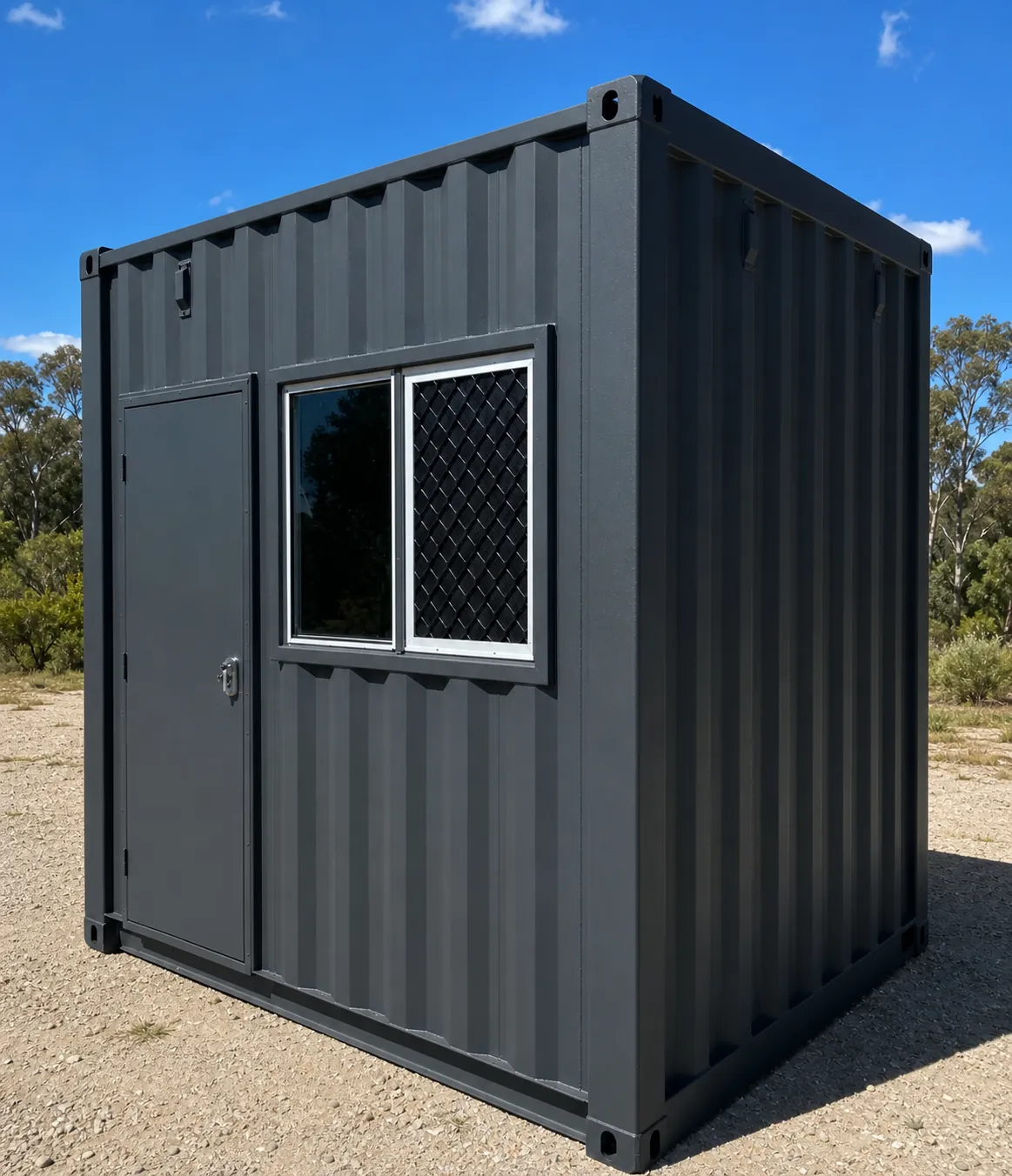
Both work. Container units have ISO corner castings and forklift pockets, so a rated forklift or telehandler can place them on an open, firm site. A crane is the answer whenever the unit has to travel over a fence, a hoarding or an existing building.
The licensing is not optional. Under the national high risk work licensing scheme, a person applying slinging techniques to sling a load, selecting and inspecting the lifting gear, or directing a crane operator when the load is out of the operator’s view, must hold a dogging (DG) licence, or a rigging licence that covers it. On a site office lift, the load is almost always out of the operator’s view at the moment it lands, so plan for a dogger.
Ground under the crane matters as much as ground under the office. Outriggers concentrate a very large load into a small footprint, so the crane contractor spreads it with pads sized for the actual bearing capacity of the ground, which is why they will ask what is buried under the standing area. Lodge a Before You Dig Australia enquiry before anyone sets up. It is free, asset owners are asked to respond within two business days and some respond automatically within minutes, and you should lodge at least one business day before work starts.
Overhead powerlines are the hazard that kills people on days like this, and the distances are set by state law. In Victoria, the No Go Zone rules under the Electricity Safety (General) Regulations 2019 require a registered spotter between 3.0 and 6.4 metres of distribution powerlines up to 66 kV, and network operator permission inside 3.0 metres. For transmission lines on towers the spotter zone runs from 8 to 10 metres, with permission required inside 8 metres. Other states use comparable figures that increase with voltage, so check your regulator and network operator, and allow for line sag and swing on a hot or windy day.
What services get connected, and by whom?
A site office is a construction electrical installation and falls under AS/NZS 3012:2019 Electrical installations, construction and demolition sites. The unit arrives with its switchboard, LED lighting and outlets fitted, and a licensed Australian electrician makes the final connection to your site supply.
- RCD protection. Socket outlets in site sheds and transportable structures must be RCD protected, typically at 30 mA.
- Testing regime. AS/NZS 3012:2019 sets three-monthly operating-time testing for RCDs on construction sites, in addition to the push-button test before equipment is connected. Start the register on day one rather than three months in.
- Air conditioning. The split system condenser is externally mounted, so it needs clearance and a clear path for condensate. Do not push the office hard against a hoarding on the condenser side.
- Data. Most sites run a 4G or 5G router. A steel container attenuates signal, so budget for an external antenna and test it before the crane leaves.
- Amenities. Toilets and washing facilities are a separate delivery and a separate legal duty. Bring the ablution block in while the crane is already on site and you save a second mobilisation.
What does the day itself look like?
A single-unit set-down is usually a half-day operation once the pad is ready. The truck is positioned, the crane sets up and proves its ground, the dogger inspects the gear and slings the unit, the office is lifted, swung, landed onto its bearers, levelled and checked, and the gear comes off. The electrician then connects, and the unit is usable the same day or the next morning.
Work backwards from that to your programme. Typical factory production is 20 to 30 days and typical delivery is 20 to 30 days, around 40 to 60 days in total from order to site, so the pad, the services and the amenities are scheduled against that window rather than arranged after the unit lands. Compare transport dimensions across the site office range before you commit to a date.
Frequently asked questions
Do I need a crane to deliver a site office?
Not always. On open ground with firm access, a rated forklift or telehandler can lift a container unit using its forklift pockets, and some deliveries use a hiab or a tilt tray. A crane becomes necessary when the office has to clear a fence, a hoarding, an existing building or a service, or when the standing position is too far from the set-down point.
How level does the ground have to be?
Level enough that all bearing points sit in the same plane, which is achieved with packers, bearers or pads rather than by grading the whole site. Out-of-level installation is the most common cause of doors and windows that will not close squarely, and on a 12.19 metre unit the error compounds along the length.
What happens if the truck cannot get in on the day?
You pay for a standing truck, a standing crane and a return trip, and you lose the slot. That is why the access walk, the gate measurement and the overhead check belong at quoting stage. If access is marginal, a narrower panelised unit is usually a better answer than a larger crane.
Can a site office be relocated to the next job?
Yes. Container units have ISO corner castings and forklift pockets, are designed to be lifted repeatedly, and stack two high for backload, which is a large part of why builders buy rather than hire when they have projects running back to back. Panelised units relocate too, but they are less tolerant of rough handling.
Who signs off the installation?
Structural design is certified by an Australian registered engineer for your site’s wind and soil classification. We supply the compliance documentation to your building certifier or surveyor, who issues the approval. The electrical connection is certified by the licensed electrician who performs it. Compliance is collaborative and site-dependent, and the final decision rests with your certifier or the local authority.
Where to next
Still deciding on a size? Read how to choose a portable site office, or compare the SO20 20ft container site office against the SO10 10ft container site office. If the unit is a converted container, the shipping container site office buyer guide covers what to check before it ships, and the amenities that have to land in the same order are in ablution blocks and crib rooms for Australian worksites. Every unit is built to order, with a factory quote available on request.
Recommended products for you
Site offices from our range.
Site Offices Australia
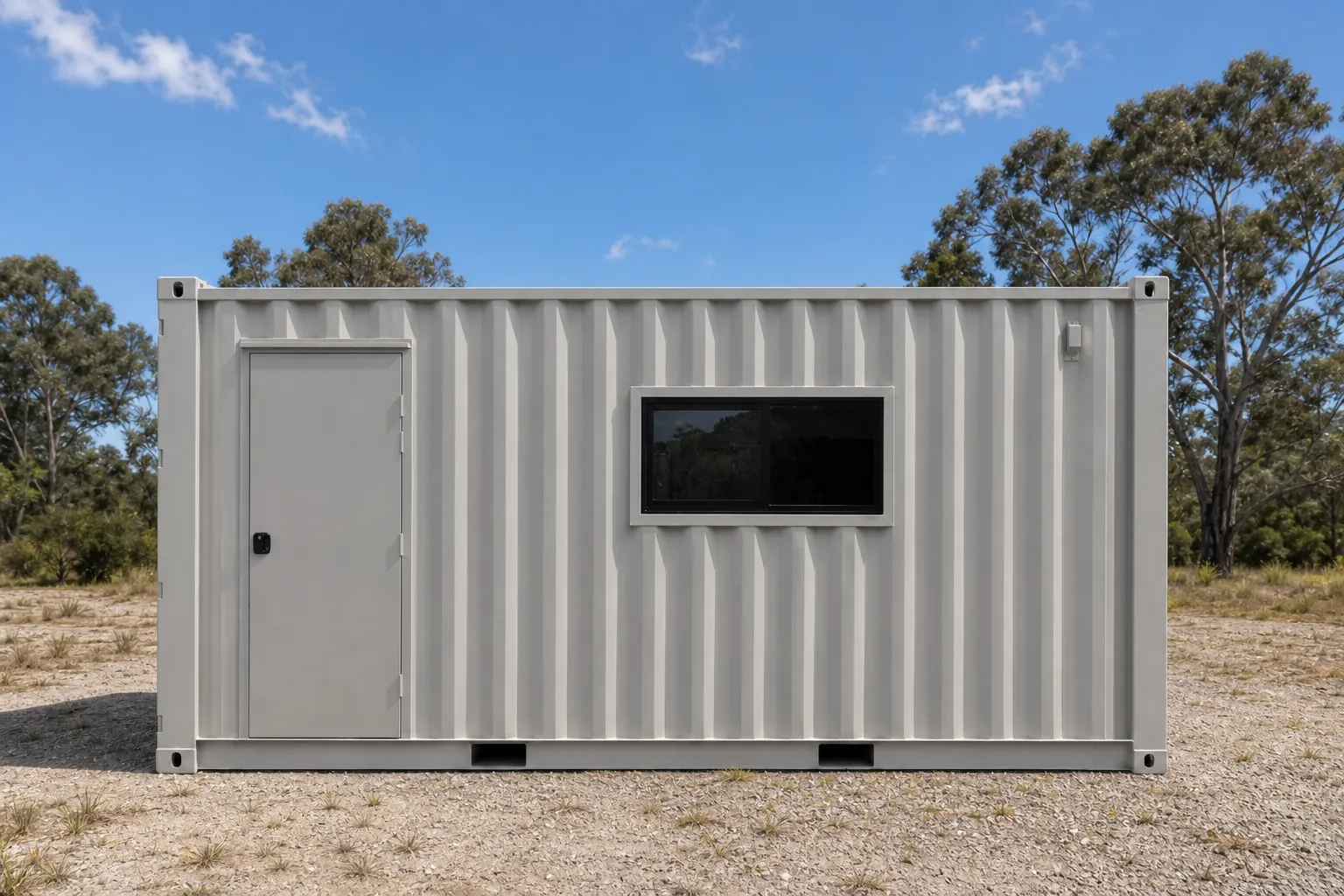
SO20 Container Site Office 20ft
13.5 m² container site office for two to four people, insulated and air conditioned
4 photosFactory quote available
View this model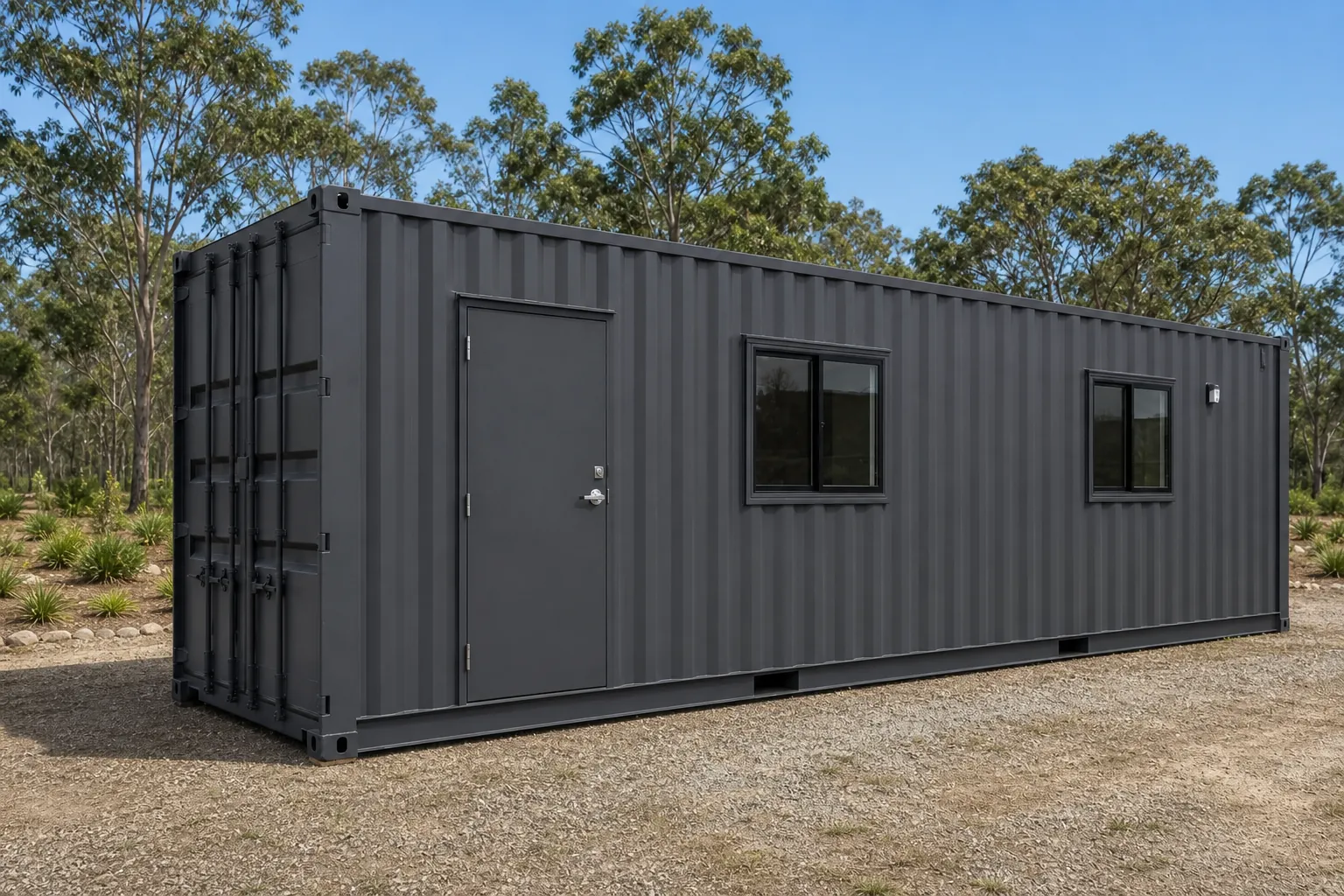
Site Offices Australia
SO40 Container Site Office 40ft
28 m² container site office that can be partitioned into separate rooms
4 photosFactory quote available
View this model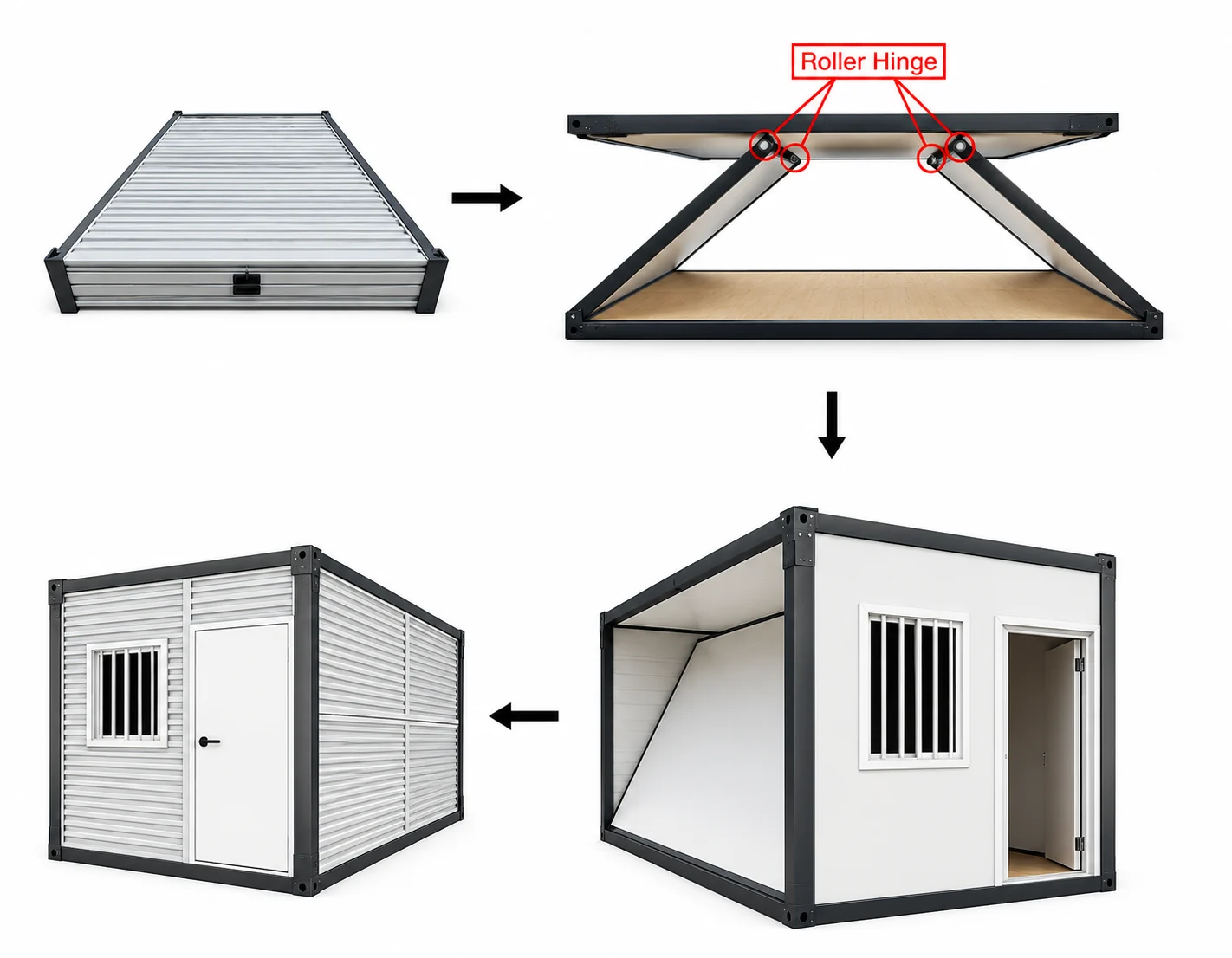
Folding Containers
EX20X X-Fold Rapid Deployment Container 5.9m
Scissors open in one motion. The quickest fold to stand up and the thinnest to pack for freight.
1 photoFactory quote available
View this model
Folding Containers
EX20Z Z-Fold Site Accommodation Container 5.9m
Zigzag fold that locks up rigid. The one specified for camps that stay standing for years.
1 photoFactory quote available
View this model
Site Offices Australia
SO10 Container Site Office 10ft
Compact 10ft container site office, insulated, wired and air conditioned
4 photosFactory quote available
View this model
Site Offices Australia
SO6 Portable Site Office 6m
6m panelised site office with full height corner glazing and vinyl floors
7 photosFactory quote available
View this modelGet a quote
Tell us your postcode and what the block is like. We come back with a written quote covering the unit and the freight to your address.