Modular Home Finance Australia | Your Guide to Building a Modern Home
Are you dreaming of a modular home or tiny home in Australia but wondering how to finance it? Modular-home finance varies by applicant, lender, property and project, so understanding the application pathway and credit terms is essential.
At Future Modular Homes, we link to Ausloans for independent finance information. Ausloans decides product suitability, eligibility, approval, rates, fees, security, coverage and terms after assessment.
What Is Modular Home Finance Australia?
Finance for modular homes varies by lender, applicant, security and project; Ausloans explains available products and terms after assessing your application. Because modular projects involve factory, delivery and site stages, any finance scope depends on lender assessment, security, documentation, eligibility and approved terms.
A lender application may ask about:
-
The cost of your modular home modules or kit
-
Site preparation and foundation works
-
Delivery and assembly
-
Optional extras like decks, landscaping, or solar upgrades
Approved finance scope, budget, conditions and timing will be set out by the lender in your offer after assessment.
Working out what those line items add up to comes first. We break down what goes into the figure, and the costs people forget, in what a tiny house costs.

Benefits of Modular Home Finance Australia
The Ausloans application pathway includes independent assessment of these finance details below:
- Application Options – Ausloans determines structures after assessing applicants and modular or tiny homes.
- Provider Assessment – Ausloans determines eligibility, approval and timing after reviewing application and documents.
- Scope Assessment – Ausloans determines whether finance covers home, delivery, assembly or site works.
- Rates and Fees – Ausloans confirms pricing and terms after assessment.
Why Modular Homes Are a Smart Investment

Modular homes are gaining popularity across Australia for good reasons:
-
Build Timing – Dates depend on scope, approvals, production and logistics.
-
Customisable Designs – Tailor your home to your lifestyle and site requirements.
-
Sustainable & Eco-Friendly – Reduced waste and energy-efficient construction.
-
Cost Scope – Quotes record inclusions, exclusions and assumptions.
For modular-home finance, review the lender’s eligibility, scope, conditions, rates, fees, security and timing before making a project commitment.
The wider picture, and why building this way is being taken seriously as an answer to what housing costs in Australia, is covered in how modular homes are changing affordable housing in Australia.

How to Apply for Modular Home Finance Australia
The application pathway is:
- Explore our modular and tiny home range at Future Modular Homes.
- Review our finance partner, Ausloans, and submit any finance application on the Ausloans website.
- Submit your application online or speak with a finance specialist.
- Plan your build – once approved, schedule your modular home delivery and assembly.
Ausloans independently assesses applications, eligibility, approval, rates, fees, security, coverage and terms for applicants.
Ready to Start Your Project?
Modular-home finance applications require lender assessment and written documentation. Review your site, design, budget and project documents before applying. Ausloans independently assesses finance applications, while Future Modular Homes separately confirms the build scope, specifications, logistics, exclusions and quote in writing. Explore homes and Ausloans information, then review every build and finance commitment carefully before deciding whether to proceed.
Ready to take the next step? Book a call to request a quote.
👉 Get a Project Quote: Click Here
Future Modular Homes
Redefining Tiny Living, One Home at a Time.
Get expert advice from our project consultants on how we can bring your vision to life.
Other Recommended Projects For You
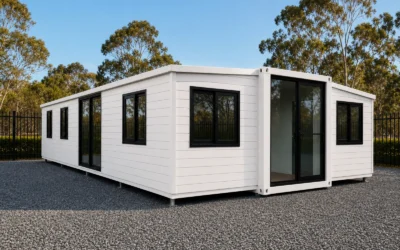
How Expandable Homes Work: Folding and Telescoping Designs Explained
An expandable home folds its walls, floor and roof inside a road-legal transport frame, then opens on site. Here is how side-fold, concertina and telescoping designs actually work in Australia, and what each one needs on delivery day.

Shipping Container Modifications: What Can and Cannot Be Changed
Anything inside the shell can change. Openings can be cut if they are reframed in steel. The corner castings, corner posts and rails cannot be touched at all. A structural guide to shipping container conversions in Australia.
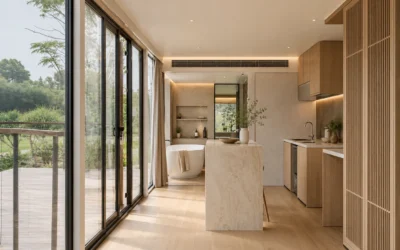
Granny Flat Rules in Australia: What Changes by State
Granny flat rules in Australia are set state by state. Floor area caps run from 60 square metres in NSW, Victoria and Tasmania to 90 in the ACT, and four jurisdictions have scrapped their minimum lot size since 2023. Here is what changes where, and what a certifier needs before a modular secondary dwelling can go in.

Site Office Delivery Day: Access, Crane, Hardstand and Services
What has to be ready before a portable site office arrives: truck access and the 4.3 metre height limit, a level compacted hardstand, crane licensing and powerline clearances, and the electrical connection under AS/NZS 3012.

Are Expandable Homes Class 1a Permanent Dwellings in Australia?
Class 1a is a classification a certifier applies to a building on a site, not a badge a factory attaches. Here is what the NCC, the ABCB prefabrication handbook and the referenced Australian Standards actually require of a folding module.

Shipping Container Site Office: An Australian Buyer’s Guide
A practical guide to buying a shipping container site office in Australia: how to size 10ft, 20ft and 40ft units, what cutting openings does to the structure, the electrical standard that applies on a live site, and realistic lead times.
Our Product Range
Discover the wide-ranging selection of cutting-edge modular homes that we offer, designed to meet the diverse needs of modern living and elevate your experience with innovative solutions tailored for the future of home design.